
Grammar
Why Spanish says el agua and not la agua
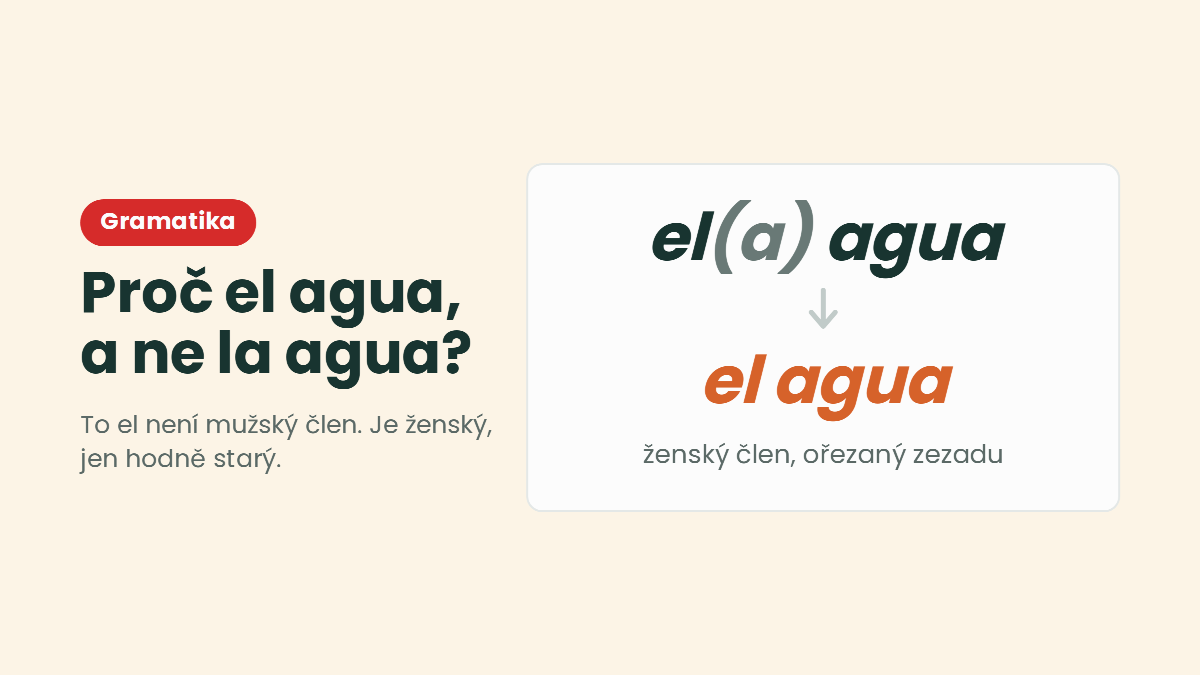
The el in el agua is not the masculine article but the feminine one in an old form. Where it came from, when you use it and why the word stays feminine.
Water is feminine in Spanish. So everything that goes with it in a sentence takes the feminine form: agua fría is cold water, agua clara clear water, and if you write agua frío you have made a mistake every native speaker can hear. Yet the article in front of the word is el, the very one you have filed away as masculine. El agua.
Textbooks usually dispose of this with a note that la agua would be awkward to say, and move on. The real explanation lies elsewhere and is worth reading, because once you have it, el agua stops being an exception to memorise. The el in front of agua is not the masculine article. It is the feminine article in an old form, one that Spanish used eight hundred years ago and has kept to this day only here.
Latin had no articles
We have to start a little further back. Latin had no el, no la and no un. Water was simply aqua, and the sentence told you whether water in general was meant or the particular water in the jug. English can hardly get through a sentence without the and a; Latin managed with neither, and its descendants only developed their articles later.
What Latin did have was demonstrative pronouns. Spanish wore one of them down and made from it words it cannot now do without: ille (that one), with its feminine illa and its neuter illud. Speakers began adding it to nouns whenever something already known was meant, much as you might say “that bread you bought”. It was used more and more often, and along the way it lost its stress, grew shorter and in the end stopped pointing. What was left was an article. English the went the same way: it comes from the same Old English demonstrative as that.
| Latin form | What is left of it in Spanish |
|---|---|
| ille — that (masculine) | the article el, the pronoun él (he), the demonstrative aquel |
| illa — that (feminine) | the article la, the pronoun ella (she), the demonstrative aquella |
| illum — him, that one (direct object, accusative) | the object pronoun lo (him, it) |
| illud — that (neuter) | the article lo in phrases like lo bueno, the good part, and the pronoun lo meaning “it” |
The last two rows are often run together, because the result is lo in both cases. The Academy’s dictionary lists the article and the pronoun as two entries.
Latin had three genders and Spanish kept two. All that remains of the third, the neuter, is a handful of pronouns (esto, eso, aquello) and the article lo: no Spanish noun is neuter, yet lo bueno and lo que dijiste are said every day. Some linguists do not count it as an article at all and treat it as a pronoun. The pronouns in this table have a story of their own, which we tell in our article on why Spanish says se lo and not le lo.
What became of ILLA AQUA
In Old Spanish the feminine article had two syllables and was ela; its plural was elas, and the masculine plural elos. In the oldest surviving records these forms are common. Then they began to shorten, and one thing alone decided how: what the next word began with.
- Before a consonant the e at the front fell away: ela casa gave la casa.
- Before a vowel the a at the end fell away: ela agua gave el agua.
So la and el are the same article, trimmed from opposite ends. Linguists call forms like these allomorphsOne of several shapes the same word or ending can take. Which allomorph you get depends on what stands next to it, not on what you mean..
At first this happened before every vowel, stressed or not. That is why old texts have el espada, el arena, el oreja and el esposa, forms nobody would write today. Alongside them la agua was written quite routinely too: in Alfonso X, in Cervantes and in Góngora, in one of whose lines la agua brings forth every good thing. The two forms alternated at the time, and neither was a mistake.
Then the range narrowed. Since the 18th century the rule has been what it is today: feminine el only before a noun that begins with a stressed a. The old habit died slowly, though, and as late as the 19th century you find el alta cima, the high peak, and el ancha escalera, the wide staircase, in literature, even though alta and ancha are adjectives.
And one more thing, the one that causes all the confusion. The masculine article el has quite a different origin. On the current account it comes from the nominative of ille, the subject form, whereas the rest of the set comes from the accusative, the object form; this is not certain, and the Academy itself writes that grammarians have argued over it. For you, only this matters: the el in el agua and the el in el libro are two different words that happen to be spelt and pronounced the same.
When el goes before a feminine word
The rule has four conditions, and all of them have to hold at once. If a single one fails, la comes back.
- The word is feminine and singular.
- It begins with a- or ha-. The h in ha- is silent. English sounds the h in hat and house; Spanish does not pronounce it at all in its native words, so hacha sounds as if it were spelt acha.
- That a carries the stress. This is the condition that drives the whole rule. English moves its stress about too, so that part will not surprise you. What will is that the stress decides which form of the article you get.
- The article stands directly before the noun. As soon as anything comes between them, the rule no longer applies.
It shows best in two columns of words that look almost alike. All that decides between them is where the stress falls; the syllable that takes it in speech is in bold.
| Stress on the first syllable → el | Stress elsewhere → la |
|---|---|
| el agua — water | la abeja — bee |
| el hacha — axe | la aduana — customs |
| el hambre — hunger | la amiga — (female) friend |
| el águila — eagle | la habitación — room |
| el alma — soul | la arena — sand |
| el área — area | la amapola — poppy |
The fourth condition is the one most often forgotten. As soon as an adjective comes between the article and the noun, the article goes back to its ordinary form: el agua fría, but la fría agua; el hacha del leñador, but la afilada hacha. The same holds when the noun is left out altogether: el ansia de placeres, the craving for pleasure, but la de dinero, the one for money.
So the rule applies only to nouns, not to adjectives, even when the two look identical. In la alta cumbre, the high summit, alta is an adjective, so the article is la. In el alta médica, discharge from hospital, alta is a noun, and so the article is el.
The indefinite article behaves the same way, and so do the two words formed from it: un agua, un hacha, algún alma, ningún arma. Here too the form is not masculine; it is una, alguna and ninguna cut short. The full una águila is not counted as a mistake; it is simply hardly ever heard nowadays. And as soon as anything comes between the article and the noun, the shortening disappears: una majestuosa águila.
When el is not used
There are more exceptions than are usually listed, and most of them make sense once you know where that el came from.
- The plural. The rule holds only in the singular: las aguas, las hachas.
- Diminutives and derived words. The ending pulls the stress on to another syllable, and the reason for el goes with it: la agüita, a drop of water, la alita, a little wing, la hambruna, famine. Forms like el agüita do turn up in texts, but they are not regarded as standard.
- Compounds that begin with an unstressed a. La aguamarina (aquamarine), la aguanieve (sleet). That agua is tucked inside them makes no difference.
- Names of letters. La a, la hache. Most likely because the word letra, letter, is understood: la (letra) a.
- People’s names. La Ana, la Álvarez. With surnames it is also the only way to tell whether a woman or a man is meant.
- Company names. La Alfa Romeo is the company; el Alfa Romeo would be the car.
- Most acronyms. What decides is the word behind the acronym: la APA because asociación is stressed on its last syllable. El AVE, Spain’s high-speed train, is different: it is masculine, after the word tren, and there el really is the masculine article.
- Words for people, where the gender has to show. La árabe, an Arab woman, la ácrata, a woman anarchist. The form is the same for both sexes, so the article is the only thing that tells you which is meant. With words that have a separate form for each gender, tradition keeps el instead: el ama, the lady of the house, el aya, the governess. With feminine forms that were coined recently, though, speakers have gone for la of their own accord, and people say la árbitra, a woman referee.
- Place names vary. Continents keep el (el África negra, el Asia islámica), whereas countries and cities mostly take la: la Austria, la Ávila. And with The Hague the article is part of the name itself, La Haya.
The word stays feminine
The article changed; the gender did not. Everything else in the sentence behaves as if la were still there.
- An adjective after the noun: el agua fría, el águila majestuosa. El agua frío and el águila majestuoso are mistakes.
- An adjective before the noun: una única área, a single area. Mistakes are even more common here, because the article is shortened and tempts you towards the masculine form.
- The predicate: el agua está fría, the water is cold.
- Demonstratives: esta agua, esa hacha, aquella águila. Not este agua; that is a mistake even native speakers often make.
- Other determiners: toda el agua, mucha hambre, poca agua, otra área. They stay feminine, even when the article stands between them and the noun.
The word arte, art, stands apart, and it needs saying that it is not a case of our rule. Arte varies in gender on its own: in the singular it is used as masculine today (el séptimo arte, the seventh art, meaning cinema), in the plural as feminine (las artes marciales, martial arts, las malas artes, trickery). It takes the feminine article el only where arte really is used as a feminine in the singular, as in el arte poética, the art of poetry. That is why el arte moderno is written with a masculine adjective and no agreement is broken.
And a few words where el really is the masculine article, because the words themselves are masculine: el altavoz (loudspeaker), el avestruz (ostrich), el aguardiente (strong spirit).
The rule in six lines.
- El before a feminine word is the feminine article in a different form, not the masculine one.
- It applies when the word is feminine and singular, begins with a- or ha-, carries the stress on that a and has the article directly before it.
- Un, algún and ningún do the same: un agua, algún alma.
- Anything between the article and the noun cancels the rule: la buena agua.
- Plurals, diminutives, names of letters, proper names and words for people are outside it: las aguas, la agüita, la hache, la Ana, la árabe.
- Everything else in the sentence stays feminine: el agua fría, esta agua, toda el agua.
How to remember it
You will not learn a list of rules by reading it. What sticks is the picture: the feminine article had two syllables, and in front of water it lost the second one. Call that to mind and el agua fría and esta agua come out right by themselves, because the article in your head will still be feminine.
The rest is habit, and habit comes from speaking. Stress, incidentally, matters more than it seems: it decides not only this but also how easily a Spanish speaker in the street will follow you. Our article on perejil shows how much the way you say a single word can give away. These are exactly the small things it helps to have someone listening for: we correct them in our group courses and in one-to-one tuition.
- The account of how the form arose and all the rules come from the entry el in the Diccionario panhispánico de dudas (2nd edition, Real Academia Española and Asociación de Academias de la Lengua Española), sections 1 to 2.3, and from the entries agua, arte and uno -na.
- The history of the form, examples from old texts and the exceptions in more detail: Nueva gramática de la lengua española (RAE and ASALE), § 14.2, Formas del artículo determinado (I).
- The origin of the pronouns and articles in Latin ille, illa, illum and illud: Diccionario de la lengua española, entries el, la and lo, la.
- Photograph of the water — Person pours water from a bottle into a glass in a kitchen, Shixart1985, CC BY 2.0, cropped to landscape.
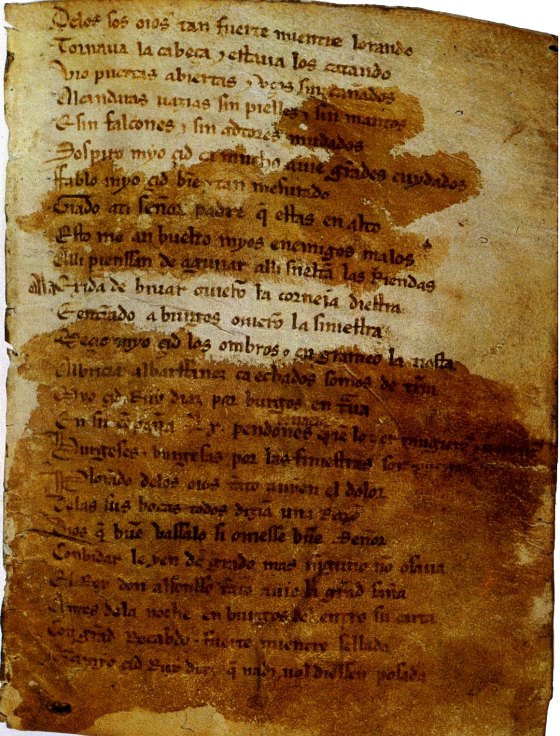
- Manuscript of the Poem of the Cid — Cantar de mio Cid f. 1r, copied by Per Abbat, public domain.
- Photograph of the eagle — Golden eagle, Patagonia Lake, Arizona, Alan Schmierer, CC0, detail.
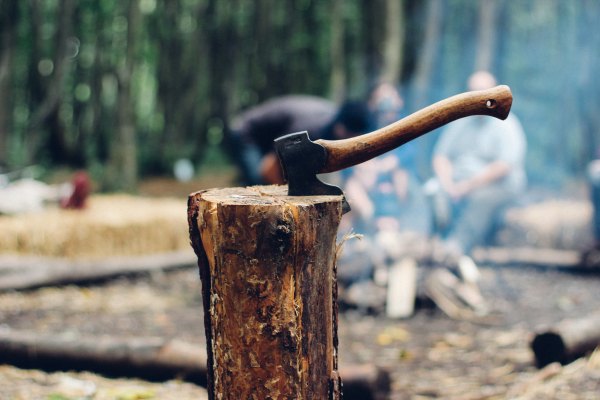
- Photograph of the axe — Splitting logs, Dan Edwards, CC0, cropped to landscape.
Frequently asked questions
Why is it el agua when agua is feminine?
When does el go before a feminine word?
Is it esta agua or este agua?
Does the rule apply in the plural too?
Is it un agua or una agua?
Why is it el arte but las artes?
Article topics Common mistakes
Sdílet článek
Co číst dál
Grammar
Why Spanish says se lo and not le lo
Spanish se lo comes from medieval gelo, its g said like the s in measure. Its se is le in disguise and shares only sound and spelling with reflexive se.
Guide
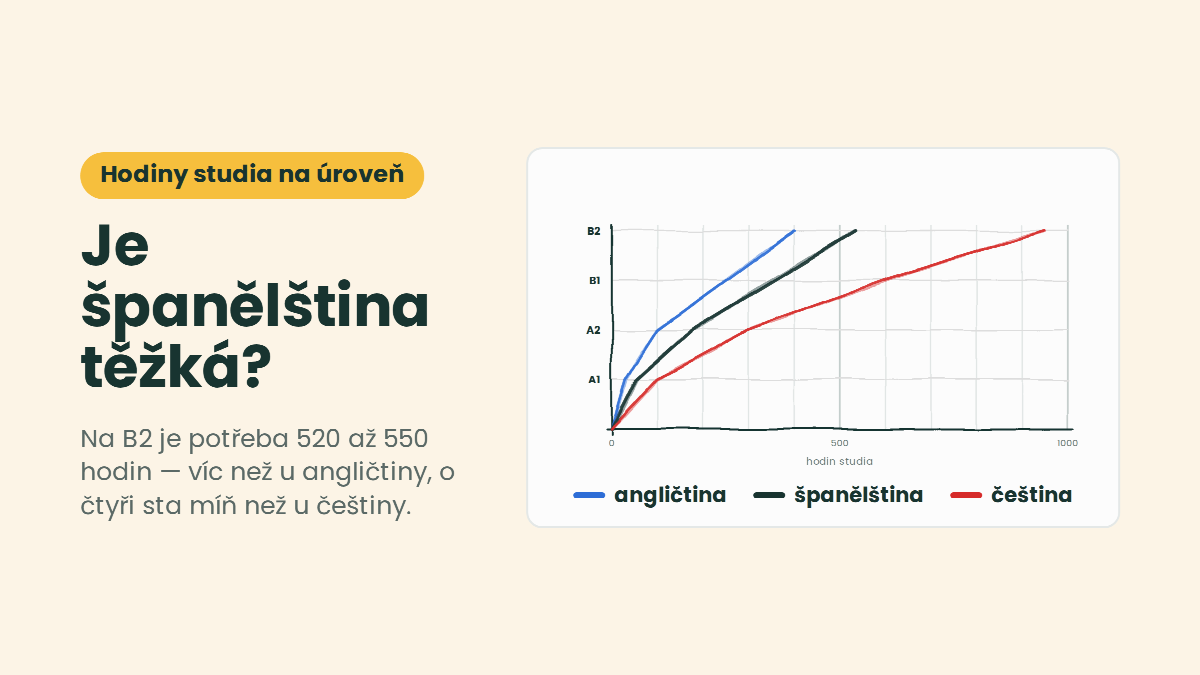
Is Spanish hard to learn?
For a Czech speaker, Spanish is harder than English and far easier than Czech is for a foreigner. More telling is where each language keeps its hard part.
Pronunciation
Perejil: the word that decided who lived
In October 1937, the story goes, the way you said perejil, Spanish for parsley, decided whether you lived or died on the Haitian–Dominican border.



