
Vocabulary
Rubio: the blond word that used to be red
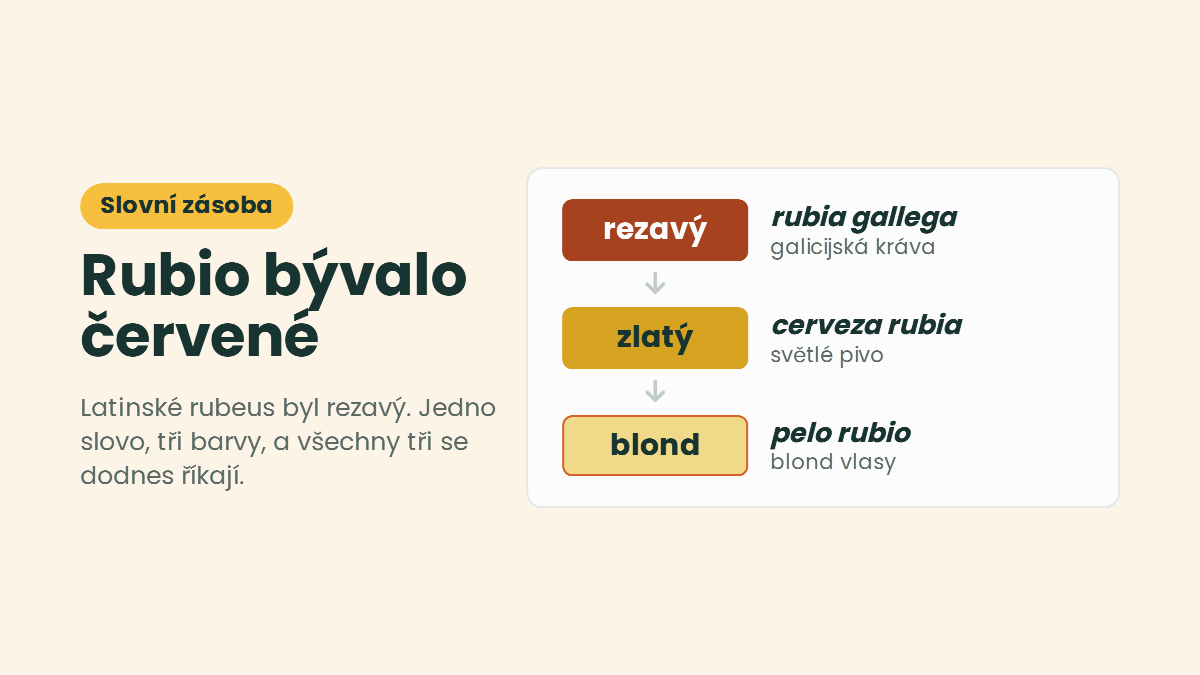
Spanish rubio means blond today, yet it comes from the Latin word for red. Why is a rubia a blonde, a golden beer and a rust-coloured cow from Galicia?
Order a cerveza rubia in a bar and you get a pale, golden beer. A shelter in Barcelona is looking for a home for a gato rubio, and the photo shows a ginger tom. In Galicia, cows of the Rubia Gallega breed graze the pastures, and they are rust-coloured. And a rubia is, of course, also a blonde.
It looks like four colours for one word. But it is a single colour that has shifted over two thousand years. It started out as red.
In Latin it was red
Latin had several words for red. The basic one was ruber. The same stem produced rubeus, also spelt robeus, which meant red or reddish.
In the first century BC the Roman scholar Varro wrote a handbook on farming, and in it he advises what colour good cattle should be. Black is best, he says, and robeus comes straight after it. Cows are never red like a tomato; what Varro meant was a rust-coloured coat. We will come back to those cows, because that is where the word has survived to this day.
You know its relatives from English. A ruby is a red stone, a rubric takes its name from the headings that were written in red in manuscripts, and rubella is the medical name for German measles. Spanish has rubí, rubéola (the same illness) and rubor, a blush, from the same family.
How red turned into gold
For fair hair Latin had a word of its own, flavus. It dropped out of the spoken language, and no Romance language inherited it as an everyday word. What is left of it is the name Flavius, the bookish Spanish flavo and, in chemistry, the flavonoids, which are yellow plant pigments.
Flavus left a gap, and each language filled it differently. French, Italian and Romanian reached for a word of the blond family, of which more in a moment. Spanish moved rubio into the gap.
That was easy to do, because rubeus never meant only a deep red. It covered a rust-coloured coat too, and rust is only a shade away from gold. Spanish also had a second word for red, rojo, from the Latin russus. Two words for the same colour do not last long side by side. The linguists who are compiling a dictionary of Spanish place names put it like this: the two drifted apart in meaning so as not to get in each other’s way. In the end rojo was left with red and rubio with gold.
The shift can still be seen in the dictionary of the Royal Spanish Academy. Rubio is defined there as a colour that is “yellowish, like gold”. Rubicundo is “rubio tending towards red”. And the entry for rojo has, next to red, one more meaning, said of hair: “a very vivid rubio”. So even today there is no sharp line between the two colours.
Czech, the language of the country where we teach, happens to have a word that has travelled the same road. Rusý is, according to the dictionary, light yellow shading into gold or rust, and it is said almost only of hair. Yet it goes back to the same ancient root as rudý, the Czech for deep red, and that root is the one behind the Latin ruber and the English red.
What happened to the word elsewhere
The other Romance languages show how much of an exception Spanish is. Nearly all of them inherited the Latin rubeus, and nearly everywhere it stayed with red or with rust.
| Language | Word from rubeus | What it means today | The word for blond |
|---|---|---|---|
| Spanish | rubio | golden, blond | rubio |
| Galician | rubio, roibo | red; rust-coloured | louro |
| Portuguese | ruivo | red-haired, ginger | louro, loiro |
| Catalan | roig | red | ros |
| French | rouge | red | blond |
| Italian | roggio, robbio | rust-red; obsolete, found only in poetry | biondo |
| Romanian | roib | a chestnut horse, one with a reddish coat | blond |
Galician and Spanish have the same word and a different colour: in Galicia un bolígrafo rubio is a red biro. A Portuguese speaker says ruivo of a redhead. Italian roggio is in Dante; in everyday speech rosso replaced it long ago. Romanian roib is now said only of a horse.
Catalan shows it best. Alongside rubeus, Latin had russus, the other word for red we met earlier. Spanish made blond out of the first, rubio, and red out of the second, rojo. Catalan dealt them out the other way round: from rubeus it has red, roig, and from russus blond, ros. Two neighbouring languages inherited the same pair of words and swapped the colours.
Where blond comes from
The word blond is recorded in French from around 1100, and from there it spread across Europe. It is most probably Germanic in origin. That is not certain, because no Germanic language is known to have had such a word of its own: English took blond from French, and German did the same as late as the seventeenth century. The Italian is biondo.
Spanish has it too. Blondo came from French and is listed in the dictionary as a synonym of rubio, but it is a poet’s word. You will not hear it in the street.
Where red has survived in Spanish
The original meaning has not vanished from Spanish altogether. It holds on where words change most slowly: in the names of places, animals and plants.
Place names. The small town of Covarrubias, near Burgos, is named after the reddish caves above the river Arlanza. Cova is a cave, and rubia here means red. The name appears in charters as early as 972. Peñarrubia, red rock, came about the same way, and linguists trace names such as Villarrubia and Monterrubio to the same Latin word.
A fish. Rubio is also a sea fish, the gurnard. Around 1800 the Canarian naturalist José de Viera y Clavijo wrote of it that its sides are coloured light red, “whence its name rubio”.
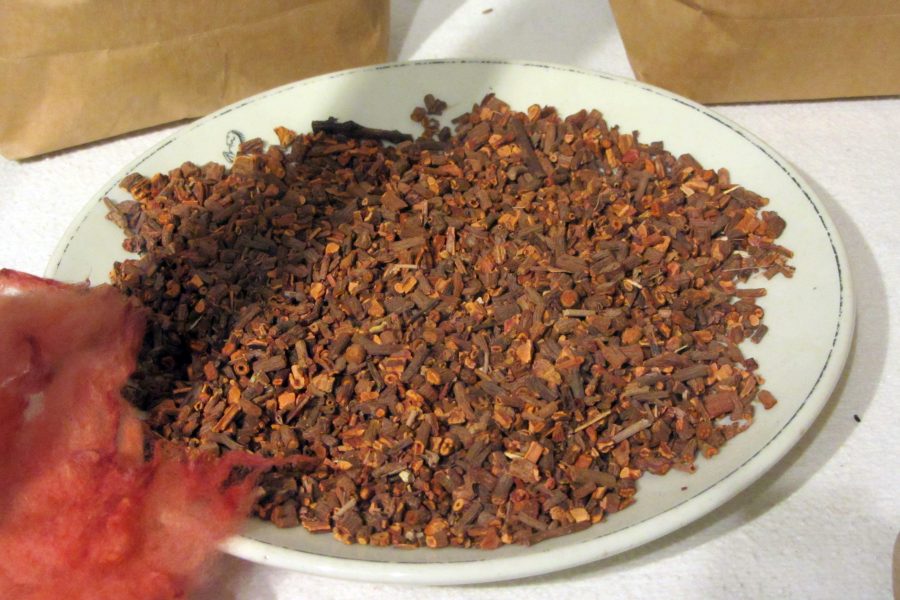
A plant. Rubia is the Spanish and the Latin for madder, or dyer’s madder. For centuries its root was used to make a red dye for wool and leather, and its use in dyeing is described as early as Pliny. Botanists call it Rubia tinctorum.
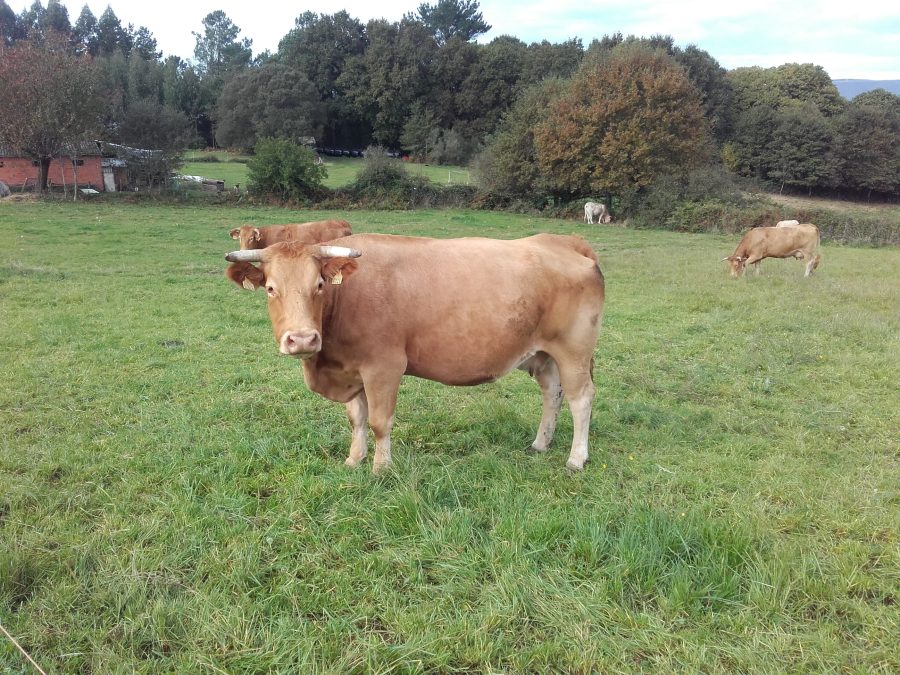
Cows. Rubia Gallega is a beef breed from Galicia, in the north-west of Spain. It got its name locally, and in Galician rubio means red and rust-coloured. The cows’ coats range from wheaten to reddish brown. It is the same colour for which Varro, two thousand years ago, had the word robeus.
Beer, tobacco and a cat
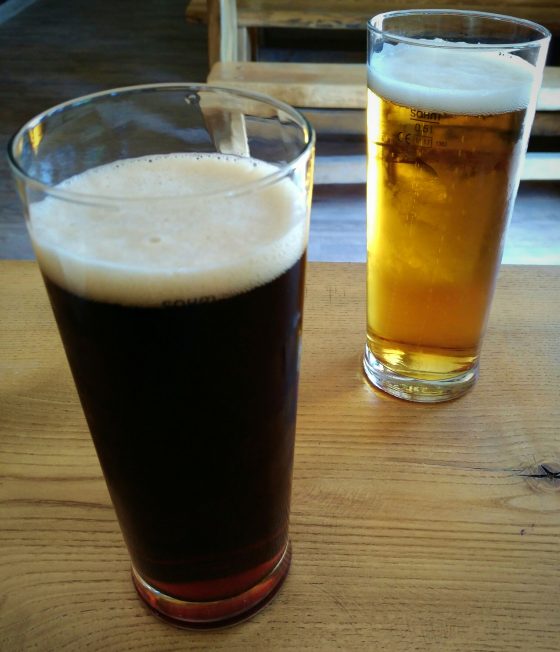
With beer and tobacco, red does not come into it. Cerveza rubia is pale, golden beer, and its opposite is cerveza negra or oscura, dark beer. Tobacco is divided the same way, into tabaco rubio and tabaco negro, known in the trade as blond and dark tobacco. Rubio here means golden. In a British pub you mostly ask for a style: lager or pale ale on one side, stout or porter on the other. Blond and golden ales exist too. Spanish sorts the lot into blond and black.
The cat is more complicated. A ginger cat really is called a gato rubio in Spain. The dictionary of the Royal Spanish Academy has, under rubio, the example sentence Al gato rubio lo llamaron Sultán: they named the cat Sultán. And the Barcelona shelter uses those words for a tom who, in the photo, is ginger from ears to tail.
It is not a given, though. Newspapers in Spain and in Latin America nearly always write gato naranja, literally an orange cat (in Britain you would say ginger), and breeders call the colour rojo. Gato naranja will be understood everywhere. Gato rubio is something you are more likely to hear in everyday speech than to read in a paper.
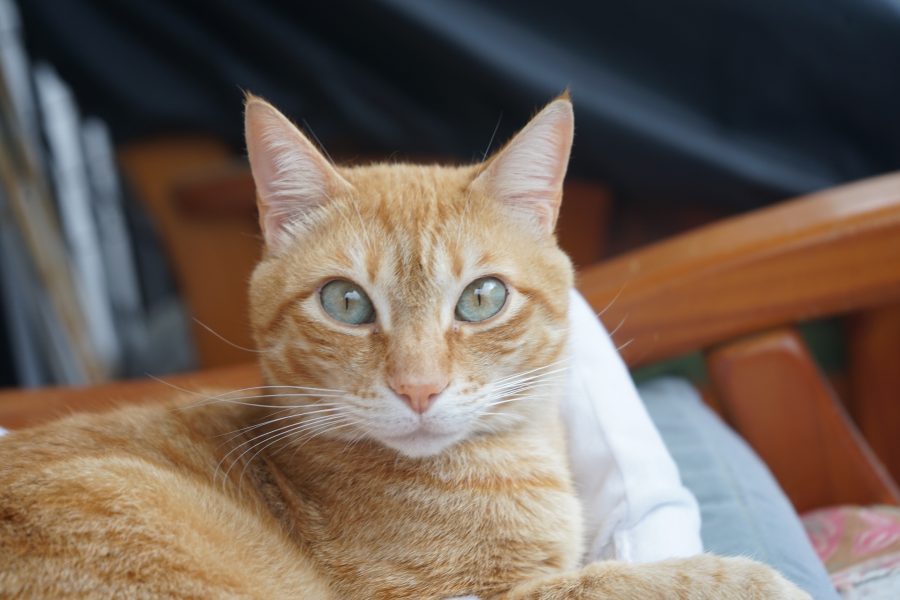
None of this applies to people. Someone with ginger hair is pelirrojo, literally red-haired; English does the same with redhead, for hair that is not really red. A Spaniard would not call such a person rubio.
Blond in Latin America
Rubio and rubia will be understood wherever Spanish is spoken. In Latin America, though, local words join them. In Mexico a fair-haired person is güero, in Colombia and Venezuela catire, and in Colombia people also say, informally, mono, which elsewhere means monkey. How much Spanish differs from one country to the next is the subject of our article on which Spanish to learn.
Rubio is one of the first words you learn in Spanish, as soon as you get to describing people. The textbook says nothing about red. Things like this are worth asking your teacher about, in our group courses and in one-to-one tuition. A word whose origin you know is harder to forget than a word from a list.
- Photograph of madder root — Meekrap gedroogd, Agaath, CC BY-SA 4.0, resized and cropped.
- Photograph of the cow — Vaca rubia galega en Lanzós, Vilalba, Chairego apc, CC BY-SA 4.0, resized.
- Photograph of the beer — Dark beer and light beer, MichalPL, CC BY-SA 4.0, resized.
- Photograph of the cat — Orange Tabby Cat sitting on a couch, LauraDelga, CC BY 4.0, resized.
- Preview photograph of a cat — Orange tabby cat closeup, CC0, cropped to landscape.
- The meanings of the Spanish words are from the Diccionario de la lengua española of the Royal Spanish Academy, entries rubio, rojo, rubicundo, blondo, flavo, güero, catire and mono.
- Place names and the parting of rubeus and russus: Ana Boullón, RŬBEA, RŬBEU, Toponomasticon Hispaniae (2025), and the entries Covarrubias and Peñarrubias del Pirón in the same work.
- Forms in the other languages: Dicionario da Real Academia Galega, Priberam, Vocabolario Treccani, DEX and Wiktionary, entries rubeus, russus, roig and ros.
- The origin of blond: Trésor de la langue française informatisé.
- Varro, De re rustica 2.5.8, from The Latin Library. The quotation about the fish is from the Diccionario histórico del español de Canarias, entry rubio.
- The Czech word rusý is from the Slovník spisovného jazyka českého, the dictionary of standard Czech.
- The shelter cat: Protectora BCN, Barcelona.
Frequently asked questions
What does rubio mean in Spanish?
Where does the word rubio come from?
How do you say red-haired or ginger in Spanish?
Is a ginger cat called a gato rubio in Spanish?
What is cerveza rubia?
Is there a word blondo in Spanish?
Article topics Varieties of Spanish
Sdílet článek
Co číst dál
Vocabulary
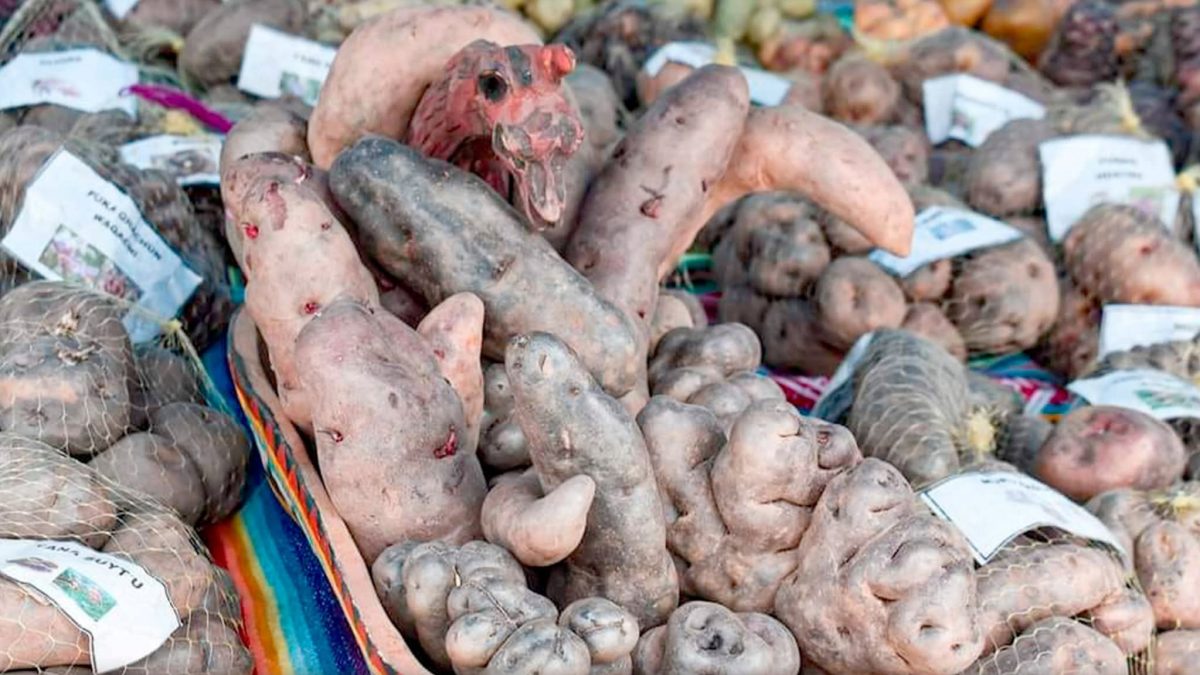
Papa or patata? Potatoes as Peru knows them
Why Spanish calls the potato both papa and patata, how many varieties grow in Peru, what chuño is, and how the Colorado beetle became the American beetle.
Pronunciation
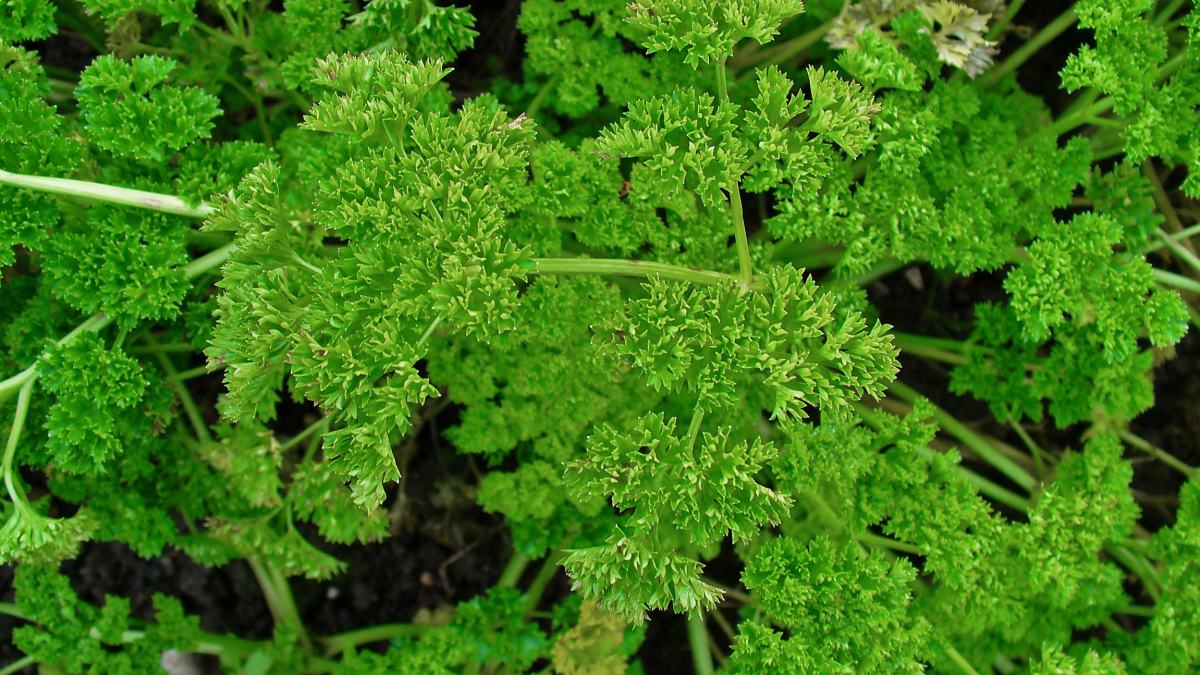
Perejil: the word that decided who lived
In October 1937, the story goes, the way you said perejil, Spanish for parsley, decided whether you lived or died on the Haitian–Dominican border.
Guide
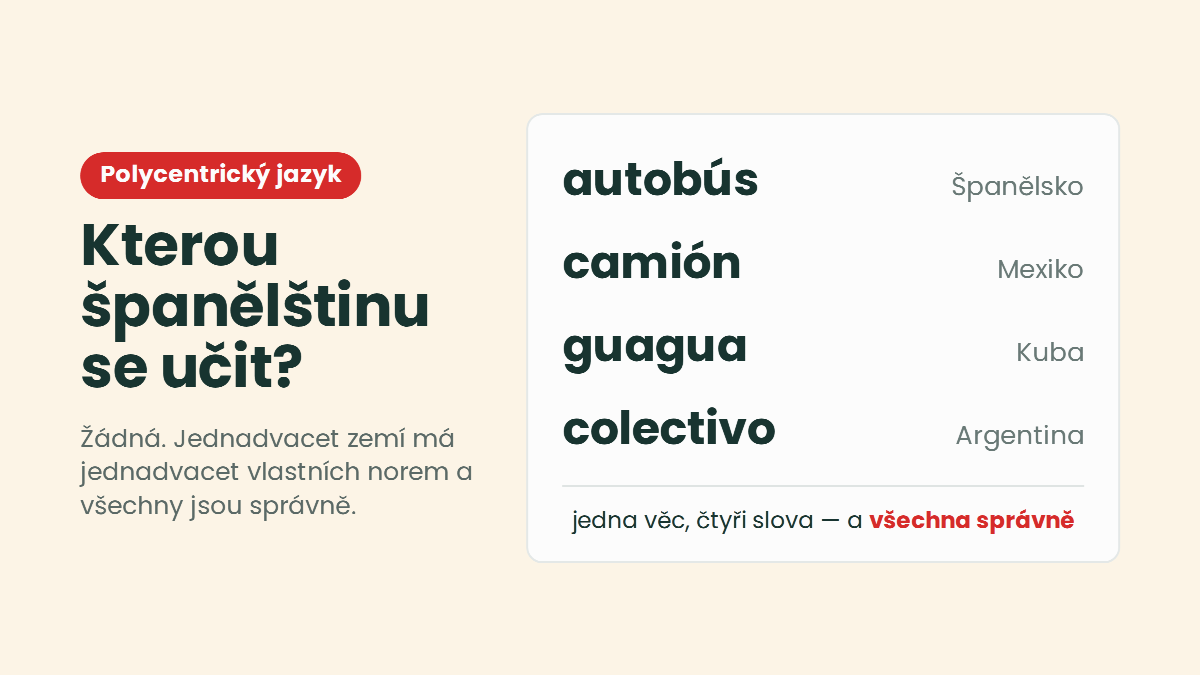
Which Spanish should you learn?
The one within reach. Spanish is a pluricentric language: each of its twenty-one countries has its own variety and all are correct. No Spanish is wrong.



