
Vocabulary
Bolígrafo or birome? The biro and its names
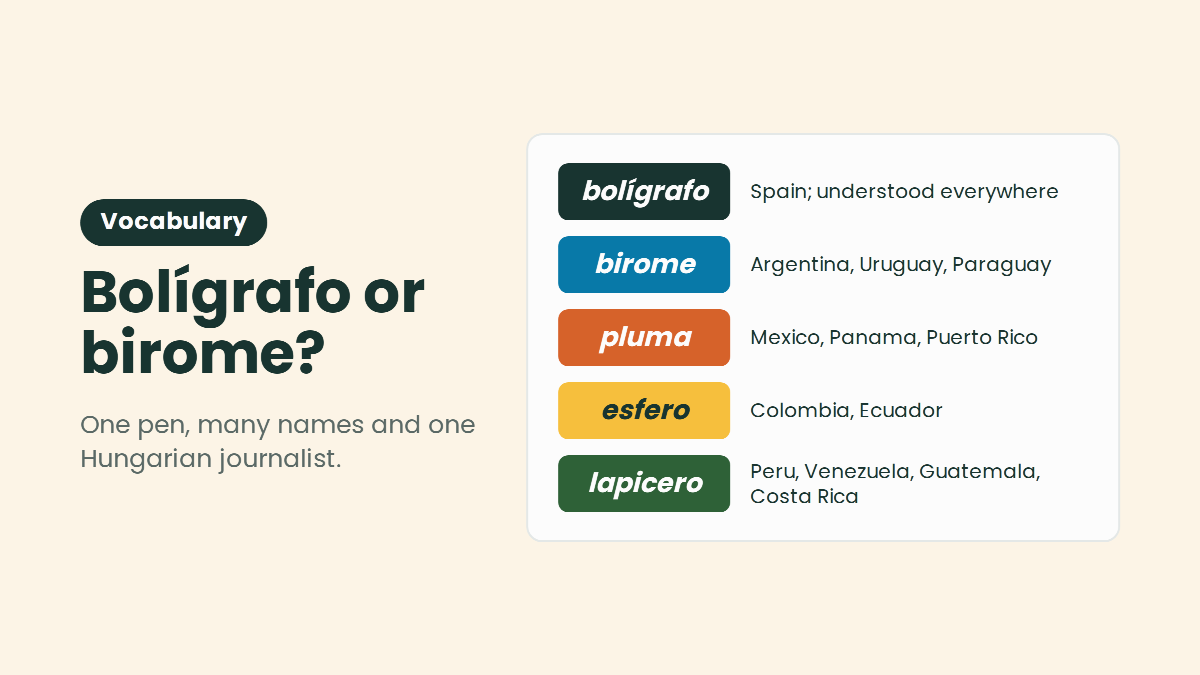
Spanish calls the ballpoint pen bolígrafo, birome, pluma, lapicero or esfero. Where each is said, which words can trip you up and who László Bíró was.
A Spanish textbook will tell you that a biro is a bolígrafo. In Buenos Aires, though, you will be handed a birome, in Mexico a pluma, in Bogotá an esfero and in Lima a lapicero. It is the same cheap pen every time.
One of those words is also a man’s name, and so is the English one. The ballpoint pen reached the shops thanks to a Hungarian journalist, László Bíró, and it happened in Argentina. Here is the story in order: how the pen came about, what it is called where, and which words can trip you up.
A ball instead of a nib
A fountain pen has a metal nib and thin ink. A ballpoint has a tiny ball at the end. As you write, the ball turns, picks up thick ink from a tube and leaves it on the paper. That is where the word “ballpoint” comes from. Spanish bolígrafo says the same thing: bola means ball.
The idea of the ball is older than the pen we know. An American, John J. Loud, was granted a patent for a pen like this on 30 October 1888. He was not thinking of letters, though. The patent says the pen is good for rough surfaces such as wood or coarse wrapping paper. It was too rough for ordinary paper and never reached the shops.
A journalist with an annoying pen
László Bíró was born in Budapest in 1899. He worked as a journalist and wrote with a fountain pen. It kept stopping just when he needed it most. The story goes that a newspaper press gave him the idea: its ink dried at once and did not smudge. He then looked for the right ink with his brother György, who was a chemist.
Nobody is sure exactly when he started. Some sources say he showed his first pen at a trade fair in Budapest in 1931; others say he only began work in 1933. What is certain comes from the paperwork: he applied for a patent in Hungary on 25 April 1938 and in Britain in June of the same year.
Bíró came from a Jewish family, and Hungary at the time was pursuing an anti-Jewish policy. On the last day of 1938 he left for France. When Germany occupied France in 1940, he moved on to Argentina.
Birome: Bíró and Meyne
In Buenos Aires he carried on working with his brother and with a friend called Juan Jorge Meyne. Only there did the pen begin to write as it should. That was in 1943, and in the same year Bíró applied for patents in Argentina and in the United States. From 1944 the pens were mass-produced in Buenos Aires and sold to the public.
The brand was called Birome. It is made from two surnames: Biro and Meyne. Argentinians turned it into an ordinary word, la birome, which they use for any ballpoint. English speakers did the same with the surname on its own, which is why you write with a biro.
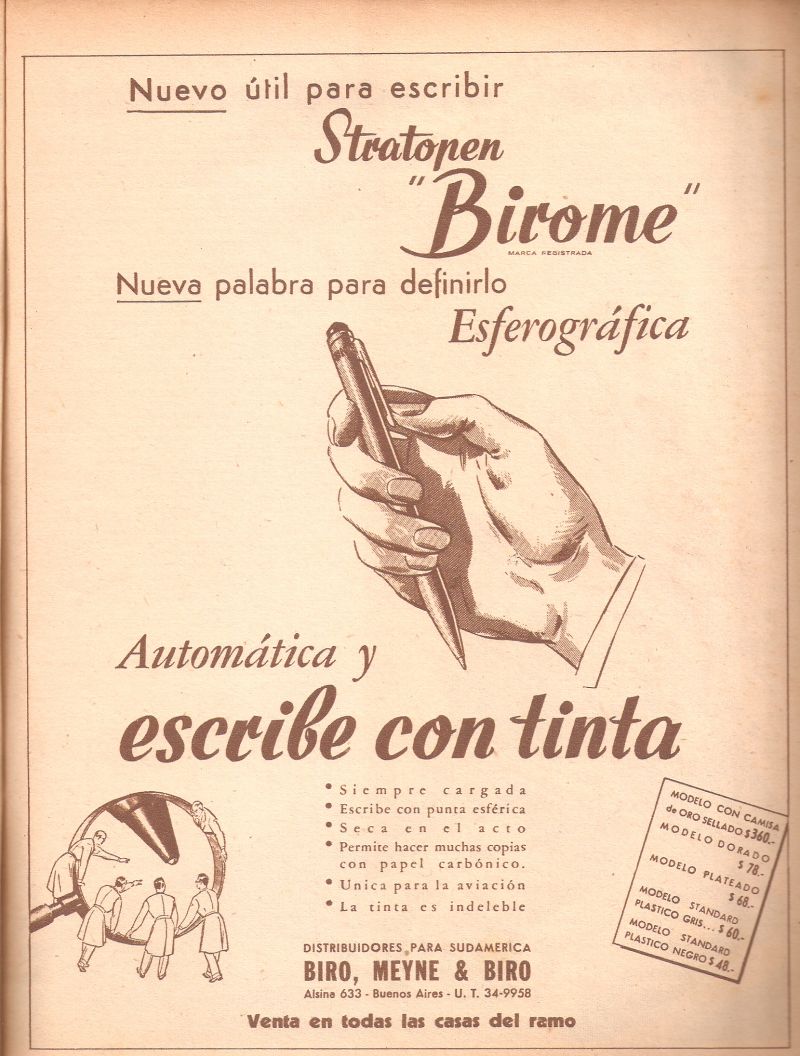
In 1944 Bíró sold the rights for the United States. A year later an American, Milton Reynolds, began selling a ballpoint of his own in New York; it cost about ten dollars. It took a Frenchman, Marcel Bich, to make the ballpoint cheap. He bought a licence and in 1950 started selling the Bic Cristal. More than a hundred billion have been sold.
László Bíró stayed in Argentina. He died in Buenos Aires in 1985.
What the pen is called where
The basic word is el bolígrafo. That is what they say in Spain, where everyday speech shortens it to el boli. It is understood everywhere, though. The Dictionary of Americanisms, compiled jointly by the academies of the Spanish language, uses it to explain every one of the regional words. And there are plenty of those:
- la birome: Argentina, Uruguay, Paraguay and the south of Chile.
- la lapicera: Argentina, Uruguay, Paraguay and Bolivia.
- el lapicero: Peru, Venezuela, Guatemala, El Salvador, Costa Rica, the Dominican Republic and western Colombia.
- el esfero: Colombia and Ecuador. It is short for esferográfico; esfera means sphere.
- la pluma: Mexico, Panama and Puerto Rico. In Mexico the full name is pluma atómica.
- el lápiz pasta: Chile.
- el lápiz tinta: Honduras.
The map shows the regional word the dictionary records for each country. It does not say you will hear nothing else there, nor which word is more common.
Where it is not clear-cut
In Argentina two words live side by side, birome and lapicera. The dictionary lists both for Argentina and does not say which is more common. For Colombia the dictionary records esfero for the whole country, and lapicero as well in the west and south-west. In Bogotá you will hear esfero. Bogotálogo, a dictionary of the city’s speech, even counts it among the words typical of the capital and says it sounds odd in much of the rest of the country. So the sources do not quite agree: one has esfero at home all over Colombia, the other mainly in Bogotá. For Chile the dictionary records lapicero alongside lápiz pasta, and birome in the south.
Bolivia and Nicaragua have the widest choice. Bolivia says lapicera, lapicero, esferográfico and puntabola. Nicaragua says lapicero, pluma and lápiz tinta. That is why both countries are hatched on the map.
For Cuba the dictionary gives no regional word at all, so it is white on the map. Most of the other countries we know only from this one dictionary. So treat the map as a guide, not as borders on the ground. With bolígrafo you cannot go wrong anywhere.
Watch out for pluma, lapicero and lápiz
This is where you really can slip up. Some of these words mean a different thing a few countries away.
| Word | Where it is a ballpoint | What it means elsewhere |
|---|---|---|
| la pluma | Mexico, Panama, Puerto Rico, Nicaragua | a feather everywhere; pluma fuente is a fountain pen; in Panama, Puerto Rico and the Dominican Republic also a tap |
| el lapicero | Peru, Venezuela, much of Central America | a propelling pencil in Mexico, Cuba and Ecuador; a pencil in Spain; a desk tidy for pens in Argentina, Paraguay and Panama |
| la lapicera | Argentina, Uruguay, Paraguay, Bolivia | in the same countries and in Chile, also a fountain pen |
| el lápiz | only with a second word: lápiz pasta in Chile, lápiz tinta in Honduras and Nicaragua | a pencil everywhere |
| el boli | Spain | an ice pop sold in a little plastic bag in El Salvador, Nicaragua and Costa Rica |
So in Mexico lapicero gets you a propelling pencil. In Lima the same word gets you a biro. And if someone in Panama asks you to turn off la pluma, head for the tap.
Which word to learn
Start with bolígrafo. It is the word in the textbooks and it works in every country. Add the local word once you know where you are going or where your teacher is from. You can manage these sentences in your first few lessons:
| Spanish | English |
|---|---|
| ¿Tienes un bolígrafo? | Have you got a pen? |
| ¿Me prestas tu boli? | Can I borrow your biro? (Spain) |
| Necesito una pluma. | I need a pen. (Mexico) |
| Mi lapicero no escribe. | My pen isn’t working. (Peru) |
| ¿Dónde está mi birome? | Where’s my pen? (Argentina) |
Our advice: three words will do
You do not need to remember ten words for one pen. We tell our students at Hispánica to stick to three: bolígrafo (boli for short), lapicero and pluma. Those will get you by.
Take this as advice from our classroom, not as a statistic: we have no figures on which word is said most often. All the sources tell us is that bolígrafo is understood everywhere, that the Dictionary of Americanisms lists lapicero for more countries than any other word for a ballpoint, and that pluma belongs to Mexico, Panama and Puerto Rico.
With lapicero and pluma, keep the table above in mind: a few countries away they mean a propelling pencil or a tap. The other words you only need to recognise when you hear them.
Spanish does the same with the avocado, which is the subject of Aguacate or palta?. Pairs like these come up early in lessons too, in our group courses and in one-to-one tuition.
- The map and the drawing of the tip are our own; the national borders on the map come from Natural Earth, public domain.
- Words by country: Asociación de Academias de la Lengua Española, Diccionario de americanismos, entries birome, lapicera, lapicero, esfero, pluma, lápiz, puntabola and boli. Mexico: El Colegio de México, Diccionario del español de México, entries pluma, lapicero and bolígrafo. Spain: Diccionario de la lengua española, Espasa-Calpe 2005.
- Patents: J. J. Loud, US 392,046 (1888); L. J. Biro, GB 498,997 (application 1938) and US 2,390,636 (application 1943).
- History: Deutsches Patent- und Markenamt, The ballpoint pen; American Society of Mechanical Engineers and Centro Argentino de Ingenieros, Birome Ballpoint Pen Collection (2005).
- Bogotá: Andrés Ospina, Bogotálogo (3rd edition, Instituto Distrital de Patrimonio Cultural, 2021), entry esfero; quoted from Ana Puentes, Este no es el diccionario del español cachaco, El Tiempo, 8 May 2021.
- Birome advertisement — Bolígrafo marca birome I, author unknown, Leoplán magazine (Argentina), 1945, public domain, reduced in size.
Frequently asked questions
How do you say pen in Spanish?
What does birome mean?
Who invented the ballpoint pen?
Is pluma a ballpoint or a fountain pen?
What does lapicero mean?
Which Spanish words for pen should I learn?
Article topics Varieties of Spanish Getting started
Share this article
What to read next
Vocabulary
Aguacate or palta? The avocado, word to stone
Spanish calls the avocado both aguacate and palta. Where each is said, the truth about testicles and lawyers, how to pick a ripe one and stone it safely.
Vocabulary
Rubio: the blond word that used to be red
Spanish rubio means blond today, yet it comes from the Latin word for red. Why is a rubia a blonde, a golden beer and a rust-coloured cow from Galicia?
Vocabulary
Papa or patata? Potatoes as Peru knows them
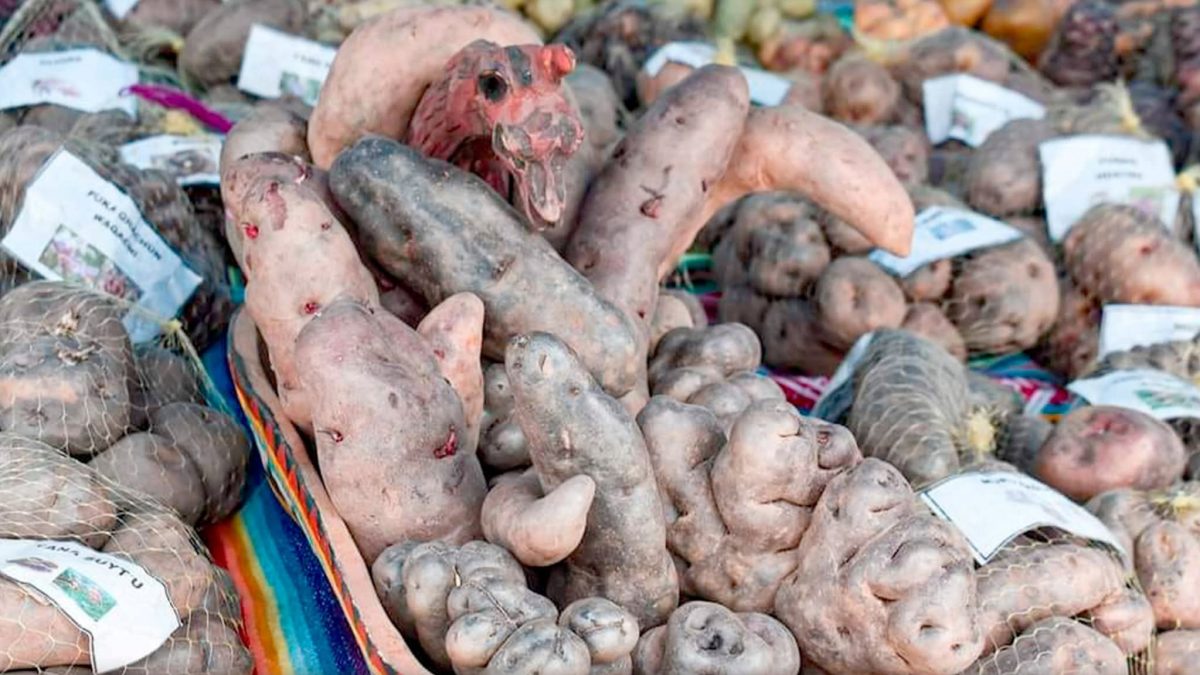
Why Spanish calls the potato both papa and patata, how many varieties grow in Peru, what chuño is, and how the Colorado beetle became the American beetle.

