
Vocabulary
Acera, vereda or banqueta? Pavements and walking

Textbooks say acera, Buenos Aires says vereda and Mexico says banqueta. Where each word is used, where it comes from and whether people there walk at all.
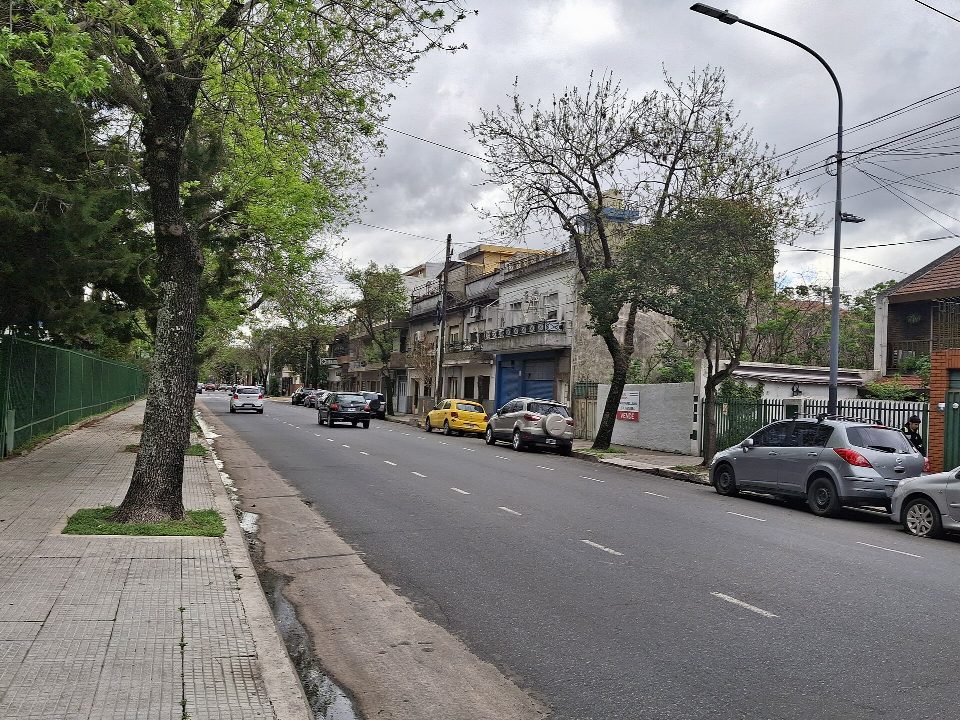
The textbook says the pavement is acera f. In Buenos Aires, though, you will hear vereda f, in Mexico banqueta f and in Bogotá andén m. The pavement itself is the same everywhere: the strip along the street where cars are not allowed.
We will go through where each word is said, what it meant before it came to mean a pavement, which words can trip you up, and whether anyone actually walks on those pavements.
Where they say acera, where vereda and where banqueta
Acera f is understood everywhere. In Spain, the Caribbean and part of Central America you need no other word. In most of South America they say vereda f, in Mexico and Guatemala banqueta f and in Colombia andén m.
Acera is the standard word. You will find it in textbooks and in official texts all over the Spanish-speaking world. The regional word lives alongside it, and that is the one you will hear in the street:
- acera f and no regional word of its own: Spain, Cuba, Puerto Rico, the Dominican Republic, Venezuela, Honduras, Costa Rica and Panama.
- vereda f: Argentina, Uruguay, Paraguay, Chile, Peru, Bolivia and Ecuador.
- banqueta f: Mexico and Guatemala.
- andén m: Colombia, Nicaragua and El Salvador.
In Chile, Argentina and Peru you will almost always hear vereda, and in Uruguay and Paraguay mostly too. In Ecuador the two words are heard equally often, and in Bolivia acera is the commoner one.
In Mexico banqueta is the home word, but everyone there understands acera. In Guatemala both are said. In Colombia andén is a little more common than acera; in El Salvador and Nicaragua it is the other way round.
What these words meant before
None of them meant a pavement to begin with. Acera was a row of houses, vereda a trodden footpath, banqueta a little bench and andén a place for walking along. All four moved to the pavement only later.
Acera: a row of houses
Acera used to be spelt hacera, and before that facera. In the 13th and 14th centuries you find only the form with f. The word is derived from faz, a face, in Latin facies. Spanish often lost an initial f: Latin facere is hacer today.
A facera was the row of houses on one side of a street. They stand next to each other and together make one face, one frontage. The word still has this meaning: acera is also the row of houses along one side of a street or square.
The name passed to the pedestrians’ strip below those houses later. Exactly when, nobody knows.
In Honduras, Costa Rica, Venezuela and Colombia you will also hear the shortened cera. It is still the same word, just without its first sound.
Vereda: a path for people and cattle
Vereda came from Late Latin. Its root is verēdus, a post horse, and a vereda was the road the post travelled along.
In Spanish it is a narrow path worn by people and cattle. In English, a footpath. The same name was given to the tracks along which herdsmen drove their migrating flocks.
This meaning still holds, in Spain and in the Americas. In South America a second, urban one was added to it: the pavement.
Banqueta: a little bench
Banqueta is a diminutive of banca, a bench. It means a stool or a bench without a back, and also a low footstool.
Soldiers used the word for the step behind a rampart. They stood on it in two ranks and fired over the wall, which covered them up to the shoulders. A banqueta was also the narrow walkway in an underground sewer, used when the sewer was being cleaned.
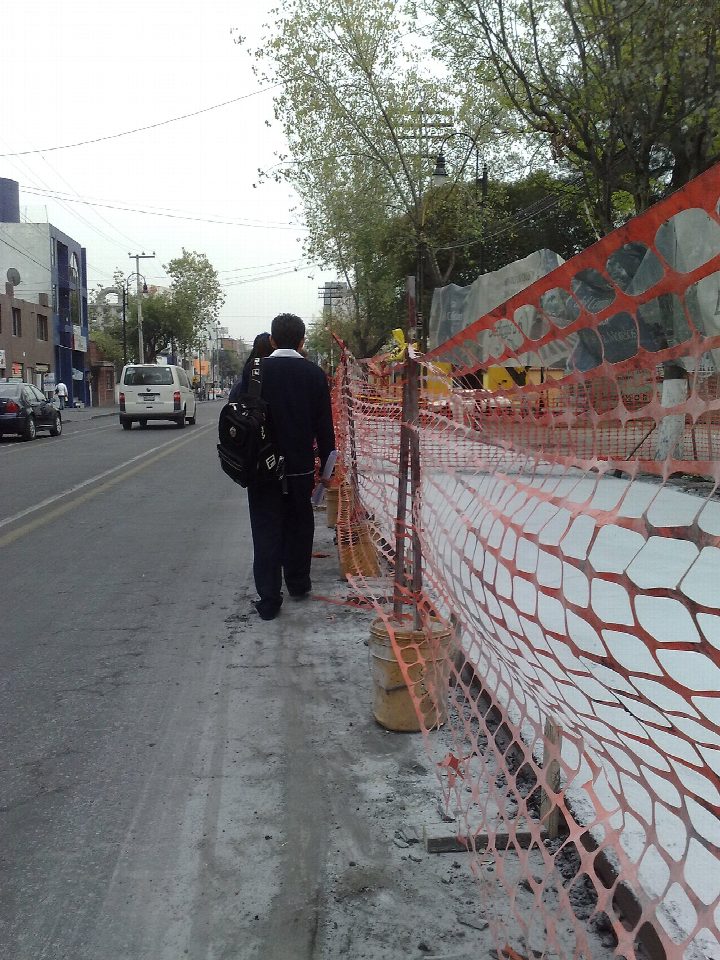
How the little bench became a pavement in Mexico and Guatemala, nobody knows. In Mexico, though, it has also grown a verb: embanquetar means to lay pavements along the streets.
Andén: a platform
Andén goes back to Latin indago, an enclosure. In Spanish it means a place for walking along: the platform at a railway station, the walkway on a pier or a bridge.
The platform is the main meaning today and holds in every country. In the Andes an andén is also a farming terrace on a hillside. And in Colombia, Nicaragua and El Salvador it is the pavement.
What is not the pavement
Next to the pavement come the kerb, the hard shoulder and the roadway, and their names change from country to country in the same way. On top of that, several words you already know mean something quite different a few countries further on. Here are the ones that can trip you up.
The kerb, the hard shoulder and the central reservation
You will hear these words in the same sentence as the pavement, but they are not the pavement:
| Word | What it is | Where |
|---|---|---|
| bordillo m | kerb | the general word, not tied to any country |
| sardinel m | kerb | Colombia, Venezuela, Peru |
| cordón m | kerb | Argentina, Uruguay, Paraguay, Bolivia, Costa Rica |
| contén m | kerb | Cuba, the Dominican Republic |
| solera f | kerb | Mexico, Chile |
| banquina f | hard shoulder, the edge of a road where you can stop | Argentina, Uruguay, Paraguay |
| camellón m | central reservation between the two directions of traffic, often grassed | Mexico, Guatemala |
Banquina sounds almost like banqueta, yet they are two different things at opposite ends of the continent. A banqueta in Mexico is for pedestrians, a banquina in Argentina for cars that need to stop.
Calzada: the roadway, and in some places the pavement
Calzada f is the roadway, the part of the street meant for cars. That holds almost everywhere. In eastern Venezuela, Bolivia and Paraguay, however, calzada can mean the pavement, and you can hear it in the Dominican Republic as well. When you hear the word in those countries, look where the person is pointing.
A vereda in Colombia is a piece of countryside
In Colombia a vereda is a rural administrative division of a municipality, something like a hamlet. A Colombian does not call the pavement vereda. When you hear Vivo en una vereda there, the person lives in the countryside, not on the pavement.
Banqueta and andén outside their own countries
Outside Mexico and Guatemala a banqueta is a stool. In Puerto Rico it is also the perch that fighting cocks sit on. An andén m is a platform almost everywhere, the place where you wait for a train.
Chile has both acera and vereda
In Chile the two words live side by side and are kept apart. The acera is the whole strip for pedestrians. The vereda is its paved part, the part you actually walk on. In everyday speech you will almost always hear vereda there.
Expressions with the pavement
Meter en vereda means to bring someone into line, literally “to put on the path”. La vereda de enfrente, the pavement opposite, is the opposite camp of opinion in Peru, Chile, Argentina and Uruguay.
In Spain people say of someone that he or she is de la otra acera or de la acera de enfrente. It is a colloquial expression and says that the person is attracted to their own sex.
Do people in Latin America walk at all?
They do, and a lot. In the big cities a quarter to a third of all trips are made entirely on foot: 34% in Montevideo, 32% in greater Mexico City, 28% in Bogotá. The idea that everyone there just goes by car, taxi or minibus does not fit those figures.
Even so, almost every visitor brings that idea home. There is a reason for it, and four things explain it: distance, the pavement, safety and the weather.
Where do people walk, and where do they stop walking?
People walk to the shops, to fetch the children and round the corner. To work they ride. In Lima 45.5% of people do their shopping on foot and 54.1% take and collect their children on foot. Only one in ten walks to work.
So people walk a lot, just not far. The journey to work tends to be long: in greater Mexico City it takes 57 minutes on average, and from the outlying municipalities a full hour. The built-up area there covers more than two thousand square kilometres and has roughly doubled since 1990. Nobody walks a distance like that, and a foreigner who mostly sees the morning and evening rush hour comes away with the impression of a city where people only ride.
The most walking is in fact done on the outskirts. In the outlying municipalities around Mexico City walking accounts for 39% of trips, in the city proper for 26%. Anyone who lives far from the centre sorts out most things in their own neighbourhood, on foot.
This may surprise you too: the big Latin American cities are mostly more densely built than European ones. In Bogotá 196 people live on each hectare of the city, in Madrid 62 and in Vienna 38. Mexico City has 85 people per hectare, Paris 40. So the shop, the school and the bus stop are usually close by. What is far away is work.
Is there anything to walk on?
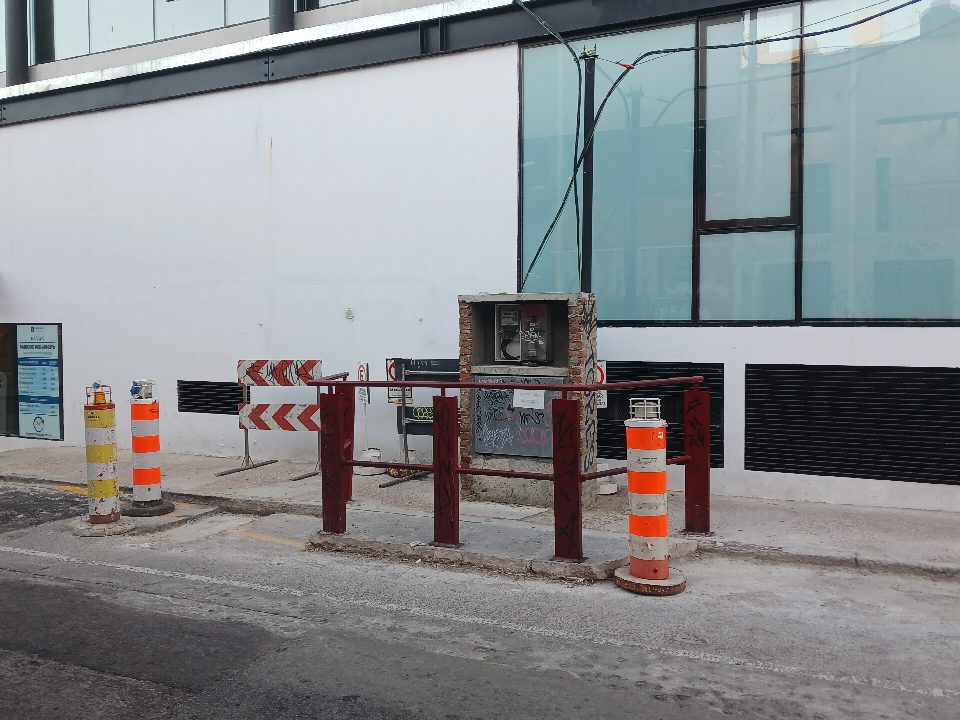
Often not. In Mexican towns and cities almost three blocks in ten have no pavement on any of the streets around them. Only a little over a third of blocks have one on every side; the remaining third have one only in places.
In practice this means that the banqueta, as the pavement is called in Mexico, is there outside one house and gone round the next corner. Then you walk along the edge of the road. People walk there all the same; it just takes them longer and is less comfortable than you may be used to.
Is it safe to walk?
People walk there every day and in large numbers, so walking is possible. In the evening, though, they are more careful than you may be used to. In Latin America and the Caribbean half of adults feel safe walking alone at night; worldwide the figure is 73%.
In Mexico 46% of adults have stopped going out at night for fear of crime, and 32% have stopped going for walks. Four in ten feel safe at night in the area around their home. These are figures for the whole country, and the differences between neighbourhoods are large. Locals know which way to walk and which way not to, and will gladly tell you.
The other matter is traffic. Across the whole of the Americas, from Canada to Chile, pedestrians account for roughly a sixth of all road deaths. Drivers there often treat a pedestrian crossing as no more than a recommendation, so before you step into the roadway it pays to wait until the car has really stopped.
Is it too hot to walk?
That depends on the place. In Guayaquil, in Barranquilla or in Monterrey in summer it is over thirty degrees in the afternoon and walking is truly hard. Bogotá has fifteen to seventeen degrees during the day, and rain is more of a nuisance there than the temperature. So heat does not hold as an explanation for the whole region.
In Guayaquil the average daily maximum stays between 29 and 32 °C all year round, in Barranquilla between 31 and 33 °C. In Monterrey it climbs to 34 °C in July and August, but in January it is a pleasant 21 °C there. In that kind of heat nobody walks around midday, and for a few blocks people take a taxi or a mototaxi m.
In the high-altitude cities rain decides. In Bogotá it rains on 185 days a year, and in April, May, October and November on seventeen to twenty days a month. In Mexico City it rains on 23 days in July on average. In Guayaquil more than four fifths of the year’s rainfall comes between January and April, and from August to October it hardly rains at all.
How do you ask whether you can walk there?
The question “can you get there on foot?” has a different answer in Latin America from the one you are used to, which is why it is worth knowing how to ask it: ¿Se puede ir a pie? Another useful one is ¿Está lejos?, is it far? The answer often comes in blocks: son cinco cuadras, it is five blocks.
Words for the street
With these words you can ask the way and cross the street in any Spanish-speaking country. The regional names for the pavement are in the table too, so that you have them in one place.
| Spanish | English |
|---|---|
| acera f | pavement (everywhere) |
| vereda f | pavement (most of South America); footpath |
| banqueta f | pavement (Mexico, Guatemala); elsewhere a stool |
| andén m | platform; pavement (Colombia, Nicaragua, El Salvador) |
| calle f | street |
| calzada f | roadway |
| bordillo m | kerb |
| cordón m | kerb (Argentina, Uruguay, Paraguay) |
| esquina f | street corner |
| cuadra f | block, the stretch of street from one corner to the next (Latin America) |
| manzana f | block of houses; also an apple |
| paso de peatones m | pedestrian crossing |
| paso de cebra m | zebra crossing |
| semáforo m | traffic lights |
| peatón m | pedestrian; the feminine is peatona |
| cruzar | to cross: cruzar la calle, to cross the street |
| atravesar ie | to go across: atravieso la plaza, I am walking across the square |
| caminar | to walk, to go on foot |
| a pie | on foot: voy a pie, I am going on foot |
The pavement has a different name in every other country, but one word is enough to ask the way anywhere. Spanish is full of pairs and trios like these, and in our group courses and in one-to-one lessons they come up as soon as the talk turns to travel.
- Vereda in Buenos Aires — Calle Irigoyen, Villa Real, Ciudad de Buenos Aires, Just a Man, 2026, CC BY 4.0.
- Banqueta in Toluca — Obra de construcción de banqueta de concreto estampado… en Toluca, Álvaro de la Paz Franco, 2009, CC0.
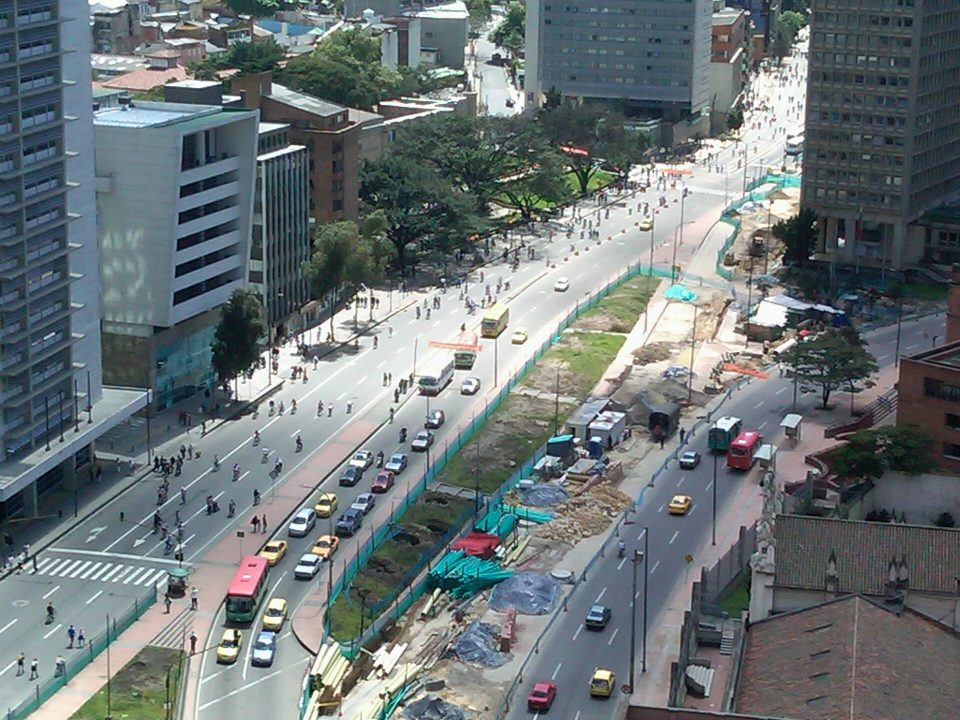
- Ciclovía in Bogotá — Ciclovía por la Carrera Séptima, Peter Angritt, 2011, CC BY-SA 3.0.
- Electricity meter on a pavement in Montevideo — Medidor eléctrico obstruyendo una vereda en Montevideo, NaBUru38, 2024, CC BY-SA 4.0.
- The map is our own drawing; the national borders are from Natural Earth, public domain.
- Words by country: Diccionario de americanismos (ASALE), entries vereda, banqueta, andén, calzada, sardinel, cordón, contén, solera, banquina and camellón; Hiroto Ueda and Francisco Moreno Fernández, VARILEX-R: Variación léxica en español del mundo (2016), concept A179; Diccionario de la lengua española (RAE and ASALE), entries acera, vereda, banqueta and andén.
- Traffic regulations that set the two names side by side: Ley 769 de 2002 (Colombia), Ley 431 (Nicaragua), Reglamento de Tránsito (Guatemala), DS 016-2009-MTC (Peru), Ordenanza General de Urbanismo y Construcciones (Chile).
- Walking in cities: INEGI, Encuesta Origen-Destino en Hogares de la ZMVM 2017 and Censo 2020, Características del entorno urbano; Encuesta de Movilidad 2023 (Bogotá); Encuesta de Movilidad del Área Metropolitana de Montevideo 2016; Lima Cómo Vamos, 14th report (2024).
- Density and extent of cities: Atlas of Urban Expansion 2016, vol. 1 (Lincoln Institute of Land Policy, UN-Habitat, NYU).
- Safety and traffic: INEGI, ENVIPE 2025; Gallup, Global Safety Report (2024 data); PAHO, Saving lives by promoting a safe systems approach to road safety in the Americas (2025).
- Weather: World Weather Information Service (WMO), climate normals for Guayaquil, Barranquilla, Monterrey, Bogotá and Mexico City.
Frequently asked questions
How do you say pavement in Spanish?
What is the difference between acera and vereda?
What does banqueta mean in Mexico?
Do people walk in Latin America?
Are there pavements in Latin American cities?
Article topics Varieties of Spanish
Share this article
What to read next

Vocabulary
Piña or ananá? The pineapple, cone to cocktail
Spanish calls the pineapple piña, but ananá in Argentina and Uruguay. Where both words come from, how it grows and why piña colada means strained.

Vocabulary
Bolígrafo or birome? The biro and its names
Spanish calls the ballpoint pen bolígrafo, birome, pluma, lapicero or esfero. Where each is said, which words can trip you up and who László Bíró was.

Vocabulary
Aguacate or palta? The avocado, word to stone
Spanish calls the avocado both aguacate and palta. Where each is said, the truth about testicles and lawyers, how to pick a ripe one and stone it safely.



